When I lived in Istanbul, mornings carried their own rhythm—unhurried yet alive, wrapped in the scent of dew and simmering tea. Each day began with a gentle walk down the Maçka hill, where my home perched above the Bosphorus, its windows catching the morning light as the city below stirred awake. The descent to Beşiktaş was something of a ritual: a quiet moment to listen to the city’s breath, to watch the ferry horns call across the water, to feel the cobblestones shift slightly beneath your steps. But the true beginning of the day was at my local bakery, tucked into a side street just before the square. The windows fogged with steam and the soft clatter of trays signaled that the first batch of poğaça had just emerged from the oven. Inside, everything smelled of warmth—of yeast, melting cheese, and thyme carried in on the breeze from someone’s open kitchen.
The baker, who had been up since before dawn, would nod as I entered and gesture toward the trays lined with golden pastries: pillowy peynirli poğaça filled with crumbly white cheese and parsley, oval ones hiding mashed potatoes spiced with black pepper and paprika, and smaller, round versions with olives tucked into the center. I’d always ask for an assortment, not because I couldn’t decide—though I couldn’t—but because choosing only one felt like leaving something behind. With a glass of freshly brewed çay in a slim-waisted glass warming my hand, I would sit for a few quiet minutes on a bench outside, watching the neighbourhood come to life. Schoolchildren in uniforms darted past, shopkeepers rolled up their shutters, and cats made slow, stretching claims on sunlit patches of sidewalk. In that moment—surrounded by the soft flake of warm pastry and the strong, steady pull of tea—poğaça was not just a snack. It was a gesture of belonging, of welcome, of starting the day fed and full and part of something larger than yourself.
That’s what poğaça is. Not just a savoury bun, but a small, familiar anchor in the moving sea of the everyday. Whether eaten on a bustling Istanbul street or baked in your kitchen thousands of miles away, each bite carries the memory of mornings wrapped in warmth, and the quiet comfort of routine done well.
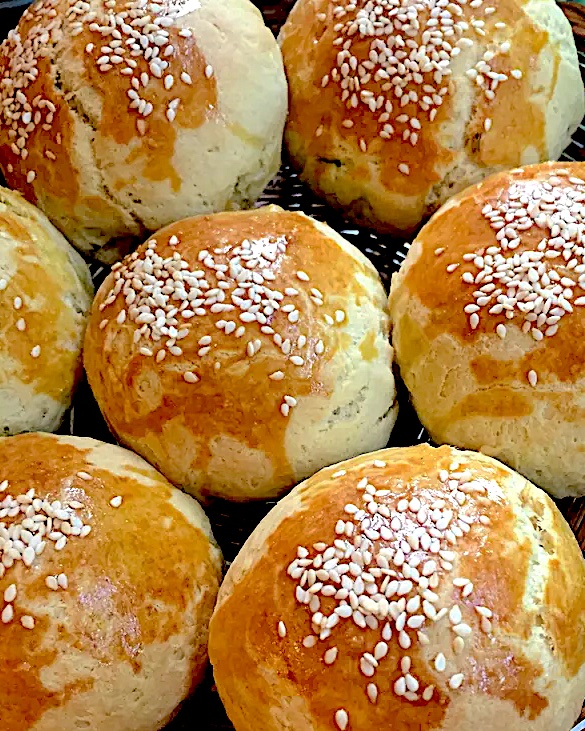

Poğaça (Turkish Savoury Pastries)
You will need
For the dough
1 cup (240 ml) warm milk
½ cup (120 ml) plain yogurt (room temperature)
½ cup (120 ml) vegetable oil or melted butter (I prefer the butter)
1 large egg (white for the dough, yolk for brushing)
1 tablespoon sugar
1 teaspoon salt
2 ½ teaspoons instant yeast (or 1 packet)
~4 cups (480–500 g) all-purpose flour (add gradually)
For the filling
1 cup (about 150 g) feta cheese or crumbled beyaz peynir
2–3 tablespoons chopped fresh parsley
(Optional: add a pinch of chili flakes or black pepper)
For the topping
Reserved egg yolk
Sesame seeds or nigella seeds (çörek otu)
Variations
Potato filling: Mashed potato, sautéed onion, black pepper, and paprika.
Olive filling: Chopped black olives with thyme and a little cheese.
Plain (sade): No filling, just dough—perfect for dipping in cheese or jam.
If you are using active dry yeast, begin by combining the warm milk, sugar, and yeast in a bowl. Allow the mixture to sit undisturbed for five to ten minutes, or until it becomes visibly foamy, indicating that the yeast has activated. While the yeast is blooming, place the yogurt, vegetable oil, egg white, and salt in a large mixing bowl and stir to combine. Once the yeast mixture is ready—or, if you are using instant yeast, simply add the warm milk without waiting—incorporate it into the bowl with the other ingredients. Begin adding the flour gradually, mixing continuously, until a soft, slightly sticky dough begins to form. It should feel pliable and moist but should not cling excessively to your hands. Knead the dough for approximately five to seven minutes, or until it becomes smooth and elastic.
Cover the bowl with a clean kitchen towel or plastic wrap, and leave the dough in a warm, draft-free area to rise for about one hour, or until it has doubled in size. During this resting period, prepare the filling by combining crumbled feta cheese with finely chopped parsley in a small bowl. Stir the mixture gently to ensure the herbs are evenly distributed, then set it aside. Drizzle a deep baking tray with 1/3 of a glass of olive oil and use your fingers to mix the oil or the butter into the dough, stretching and folding the dough on the tray for 5-10 minutes. When the dough has become an oily elastic mass, leave to raise at room temperature for 3-4 hours, or for up to a day in the fridge.
Preheat your oven to 190 degrees Celsius (375 degrees Fahrenheit), and line a baking tray with parchment paper. Once the dough has risen, punch it down gently to release any air. Divide the dough into twelve to sixteen equal portions, depending on your preferred size. Take each portion and flatten it into a small round disk. Place a spoonful of the cheese and parsley filling in the center of each disk, then fold the dough over to form a half-moon shape. Carefully seal the edges by pinching them together or pressing with the tines of a fork to prevent the filling from escaping during baking. Alternatively, if you prefer a rounded form, you can enclose the filling entirely by shaping the dough into balls. Arrange the shaped pastries seam-side down on the prepared baking tray, leaving a little space between each one. Brush the tops with the reserved egg yolk to give them a glossy, golden finish. Sprinkle sesame seeds or nigella seeds on top for added flavour and texture. Place the tray in the preheated oven and bake for twenty to twenty-five minutes, or until the pastries are golden brown and visibly puffed. Once they are done, remove them from the oven and transfer them to a wire rack to cool slightly. These pastries are best enjoyed warm or at room temperature, accompanied by a glass of freshly brewed tea or a chilled glass of ayran.
 the kitchen sorcerer