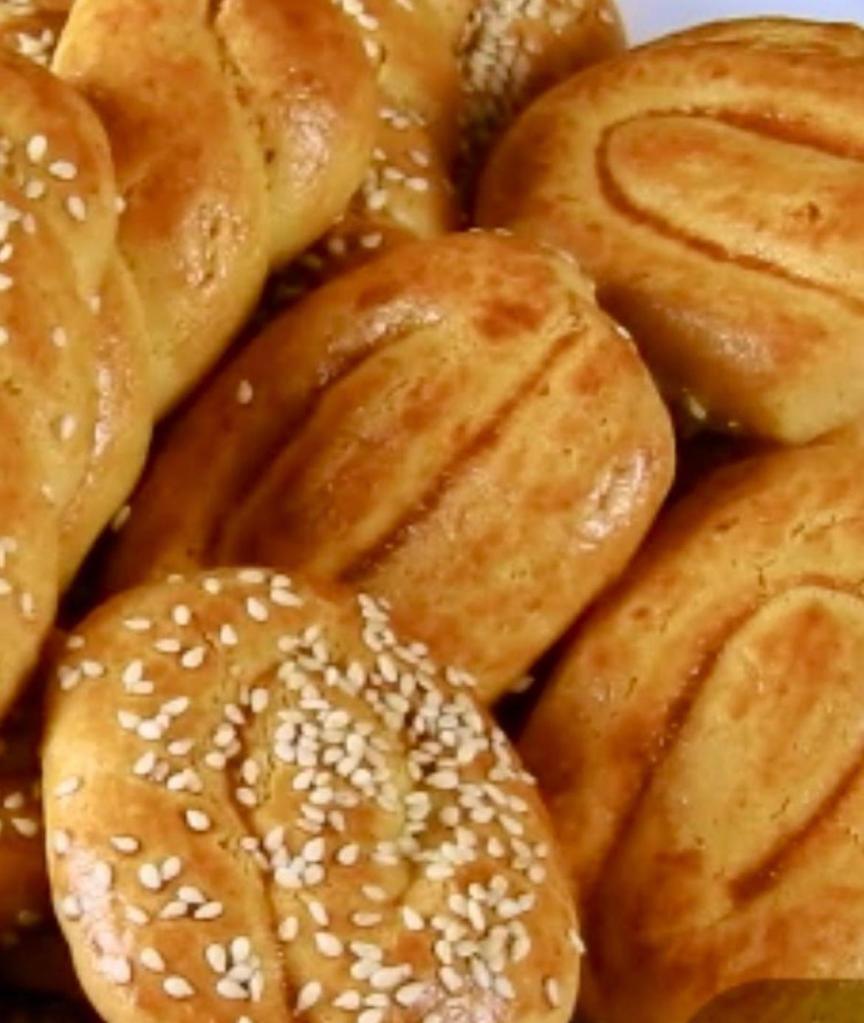
Fragrant, golden, and delicately crisp, these Smyrna-style cookies carry the warmth of home kitchens along the Aegean coast of Asia Minor. Known as Smyrneíka Koulourákia (Σμυρνέικα Κουλουράκια), they’re shaped by hand into twists, braids, or small rings, brushed with egg, and baked until light and aromatic.
This version is a modification of a family recipe passed down by my father’s sister, Kaíti whose roots trace back to Ayvalık, the old Greek Kydonies, a coastal town opposite Lesvos where baking was both a craft and a gesture of care. Knowing how much I loved these cookies, every Easter, she made sure she would bring a batch, fresh from her oven, “for me”. In Smyrna (Izmir), Ayvalık, and the nearby islands, koulourákia marked hospitality, celebration, and the sweet scent of a household preparing for Easter or welcoming guests. Generations later, these cookies remain a link to that world, the continuation of a tradition shaped by memory, forced migration, and the persistence of flavour.
Course: Dessert / Coffee Companion
Preparation Time: 25 minutes
Bake Time: 20–25 minutes
Total Time: About 45–50 minutes
Servings: 35–40 cookies
Ingredients
- 250 g unsalted butter, softened
- 180 g granulated sugar
- 2 large eggs (1 for the dough, 1 for brushing)
- 80 mL milk or evaporated milk
- 1 tablespoon orange zest (or 1 teaspoon vanilla extract)
- ½ teaspoon ammonia powder (ammonium carbonate) or 2 teaspoons baking powder
- 1 teaspoon baking soda (if not using ammonia)
- 600–650 g all-purpose flour (start with 600 g and add as needed)
- ½ teaspoon salt
- A few cloves
- Sesame seeds (optional, for sprinkling)
Instructions
Cream the butter and sugar: In a large mixing bowl, beat the softened butter with the sugar until light and fluffy – about 3–4 minutes.
Add the wet ingredients: Add one egg, the milk, and the orange zest (or vanilla). Mix well until smooth.
Combine the dry ingredients: In a separate bowl, whisk together 600 g flour, baking powder (or ammonia), and salt. Gradually add to the wet mixture, stirring or kneading lightly until a soft, pliable dough forms. Do not overwork the dough; rubb the butter and other ingredients into the flour with your fingertips to create a sandy texture (like in the sablage pastry technique). Add a little more flour if it feels sticky, but keep it tender.
Shape the cookies: Preheat oven to 180°C (350°F) and line two baking trays with parchment paper. Take small pieces of dough (about the size of a walnut) and roll into thin ropes. Twist, braid, or shape into small rings – the classic Smyrna-style forms. In some homes, especially along the Aegean coast, a single clove was pressed into the heart of each cookie, a quiet ritual that filled the air with its sweet, spicy scent. As the cookies baked, the cloves perfumed the kitchen, mingling with the butter and orange zest to create the unmistakable aroma of a Smyrna household in celebration.
Brush and decorate: Beat the remaining egg and brush lightly over each cookie. Sprinkle with sesame seeds if desired.
Bake: Bake for 20–25 minutes, or until lightly golden. Let cool on a rack – they crisp up beautifully as they cool.
Serving & Storage
Serve with coffee, tea, or sweet wine. These cookies keep well for up to 10 days in an airtight tin — and, like so many heirloom recipes, their flavour deepens with time.
Smyrneíka Koulourákia are part of a broader tradition of Aegean and Asia Minor baking, where butter, citrus, and ammonia powder lent a signature aroma to festive cookies. From Smyrna to Ayvalık, Çeşme, and the Greek islands opposite – Chios, Lesvos, and Samos such biscuits marked both everyday life and holiday tables.
Families who fled to Greece after 1922 carried these recipes with them, adapting them to new kitchens while keeping their shapes and scents unchanged. The orange zest recalls the groves of western Anatolia, the sheen of egg wash evokes domestic pride, and the gentle crunch of these cookies is a small act of remembrance, a sweet link between the present table and the one left behind.
 the kitchen sorcerer