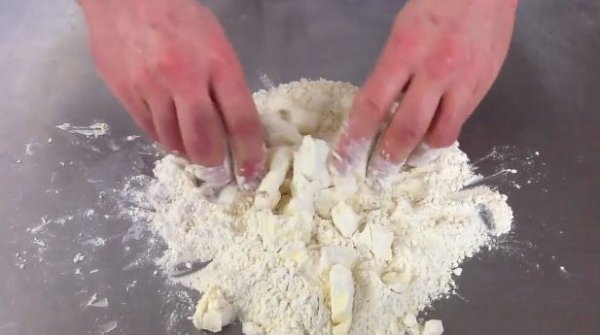
The act of rubbing cold butter into flour with fingertips to create a sandy texture is a French pastry technique called sablage. The subsequent technique of using the heel of the hand to smear the dough across a surface is called fraisage.
These methods are primarily used to make a buttery, flaky tart or pie dough known as pâte brisée.
Sablage (Rubbing with Fingertips)
The purpose of sablage (from the French word for “sand”) is to coat the flour in fat, which limits gluten development. This results in a tender, crisp, and less tough crust. You would:
- Cut cold butter into small cubes and toss them with the dry ingredients (flour, salt, and sometimes sugar).
- Quickly use your fingertips to pinch, flatten, and rub the butter into the flour mixture until it resembles coarse breadcrumbs or has some pea-sized pieces of butter remaining. The key is to work quickly so the butter stays cold and doesn’t melt from the warmth of your hands.
Fraisage (Smearing with the Heel of Hand)
After the sablage step and adding a small amount of cold water, the dough is brought together using fraisage, sometimes called the “French method” of kneading or “slap and fold”. This technique further distributes the butter into long ribbons, which creates the flaky layers when the dough is baked.
 the kitchen sorcerer