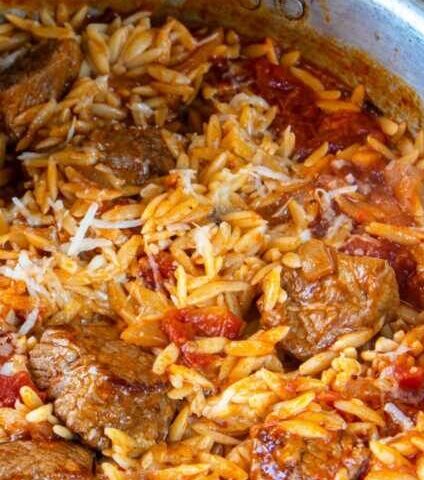
Giouvetsi (Greek: γιουβέτσι, from Turkish güveç) is a traditional Greek dish made with lamb (although beef is nowadays widely used), combined with pasta such as kritharaki (orzo) or hilopites (small square noodles), and a rich tomato-based sauce. The sauce is typically seasoned with warm spices like cinnamon, or bay leaves, which give the dish its distinctive Mediterranean flavour. Common ingredients also include onions or shallots, garlic, chicken stock, and red wine, which deepen the flavour profile. The dish is traditionally baked in a clay pot, known in Turkish as a güveç (from which the dish takes its name), which helps retain moisture and enhances the aroma of the dish.
Giouvetsi is often finished with grated cheese, such as Kefalotyri or Mizithra, adding a salty, tangy element to balance the hearty flavours. It is a beloved comfort food in Greek cuisine, frequently served at family gatherings and festive occasions.
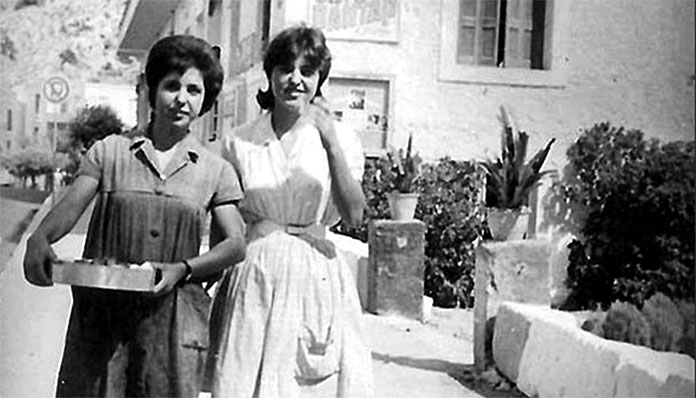
Women taking their yiouvetsi to their neighbourhood bakery ca. 1960
With the rise of urbanization in Greece in the 1950s, giouvetsi became more than just a beloved dish—it evolved into a cornerstone of a cherished urban ritual that has largely disappeared in recent decades. Traditionally, families would prepare their giouvetsi at home, carefully assembling the ingredients, and then take the dish to their local bakery (φούρνος). For a small fee (less than 10¢ until the 1970s), the bakery would cook it in their large ovens, which offered the perfect heated environment to bring out the rich, comforting flavours associated with the dish. This practice emerged during a time when home ovens were uncommon, and the bakery’s oven was not only a practical solution but also a cultural hub for the community. The aroma of baking giouvetsi mingled with the scent of freshly baked bread, creating an unforgettable sensory experience. While this ritual has faded with the advent of modern home kitchens, it remains a nostalgic reminder of a time when cooking and community were deeply intertwined.
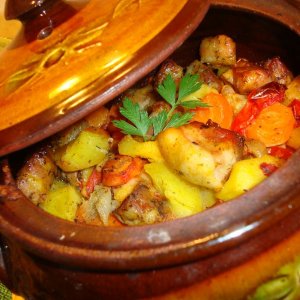
Bulgarian гювеч
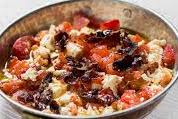
Bouyiourdi with pastrami
Somewhat related to the Greek dish is ghivetch (as the near-homophone word suggests) although its equivalents in Greek cuisine have different names – tourlou (τουρλού) and bouyourdi (μπουγιουρντί). A traditional Balkan autumn vegetable stew, is a culinary treasure with deep roots in the region’s diverse cultures. Known as гювеч (gyuvech) in Bulgarian, ghiveci in Romanian, güveç in Turkish, đuveč in Serbo-Croatian, and ѓувеч in Macedonian, its name reflects the interconnected history of the Balkans. The dish is most closely associated with Moldova, where it is celebrated as a national dish, and Bulgaria. A key feature of this beloved stew is its preparation in a güveç earthenware pot, which lends it a rustic charm and a depth of flavour unique to this traditional cooking method. Ghivetch is a celebration of seasonal abundance. Traditionally, it is made with a wide array of vegetables, sometimes as many as a dozen, creating a vibrant and flavourful medley. While the dish often shines in its pure vegetarian form, variations abound—some include meat, fish, poultry, or even dairy, adapting to local tastes and ingredients. In the Western Balkans, it is commonly served with rice, which absorbs the rich juices of the stew and adds a comforting heartiness to the meal.
Beyond its ingredients, ghivetch is a dish steeped in history, cherished across the Balkans and among the Danube Swabians, who have their own variations. Its ability to adapt to the seasons, available produce, and personal preferences ensures its enduring presence on tables across the region—a true reflection of Balkan hospitality and culinary ingenuity. Whether enjoyed as a hearty vegetarian feast or a more indulgent dish with meat, ghivetch is a flavourful journey through the history and culture of Southeastern Europe.
Giouvetsi
You will need
- 1 kg diced lamb (shoulder or leg cuts work best for tenderness and flavor; alternatively, use beef cuts like neck, chuck, or shank for a hearty variation)
- 2 medium red onions, finely chopped to add a mild, sweet flavor as the base of the dish
- 2–3 carrots, sliced into rounds or half-moons for a subtle sweetness and texture
- 350 g ripe, chopped tomatoes, fresh or canned, for a rich, tangy tomato base
- 2 tablespoons tomato paste, to deepen the tomato flavour
- 1 teaspoon of oregano or thyme to give an earthy aroma
- 1 teaspoon sugar, to balance the acidity of the tomatoes (if you use canned tomatoes, add an extra pinch)
- 1 glass of robust red wine, such as Agiorgitiko or a similar full-bodied wine, for depth and complexity
- 1 cinnamon stick, to infuse the dish with warm, aromatic spice
- 1/2 cup of high-quality olive oil. I prefer cold pressed Kalamata olive oil, for low acidity, richness and a smooth finish
- 3-4 cups unsalted chicken broth
- 240 g orzo (kritharaki), a small, rice-shaped pasta that soaks up the flavours of the sauce *
- 100 g grated Greek kefalograviera (I prefer it over the alternatives), kefalotyri or mizithra cheese, all tangy and salty hard cheeses, for topping the finished dish. If you cannot get your hands on these, you can, of course, replace these options for the more readily available pecorino romano or, as last resort, parmesan.
- 1/2 cup of fresh parsley or coriander (torn) for garnish
- Instead of kritharaki you can use χυλοπίτες (hilopites). The equivalent weight would remain the 240 gr (both are pasta and have a similar density and water absorption rate when cooked). Hilopites are typically larger and flatter than orzo, so they may cook slightly faster. Monitor the cooking process, especially when baking, to ensure the pasta doesn’t overcook. Ensure the hilopites are just covered with liquid before baking, as you would with orzo.
Heat 1/2 cup of olive oil in a large pan over medium-low heat – do not overheat it. Add the finely chopped red onions and sliced carrots, and sauté gently for about 5 minutes, stirring occasionally, until the onions are soft and translucent and the carrots begin to caramelize. Add the diced lamb (or beef, if preferred) to the pan and cook until the meat is golden brown on all sides, stirring occasionally to ensure even browning. Stir in the tomato paste and sauté for another minute to enhance its flavor. Pour in the red wine and allow it to simmer until the alcohol evaporates, leaving behind its rich aroma and depth. Add the chopped tomatoes, sugar, cinnamon stick, the oregano or thyme, a generous pinch of salt, and freshly cracked black pepper. Pour in enough chicken broth to just cover the meat. Lower the heat to a gentle simmer, cover the pan with a lid, and cook for about 45 minutes, or until the lamb is tender and the sauce has thickened slightly. Stir occasionally, adding more broth if the sauce begins to dry out. While the meat is simmering, heat a separate pan over medium heat. Add 3 tablespoons of olive oil, then stir in the orzo pasta. Sauté the pasta until it turns golden and fragrant, taking care not to burn it. Once the meat is tender and cooked through, transfer it along with the sauce to a large oven-safe baking tray or dish. Stir in the sautéed orzo pasta, ensuring it is evenly mixed with the meat and sauce. Add enough broth to the baking dish so that the pasta is just covered. As a general rule, use about 2 cups of liquid for every cup of orzo pasta. Cover the dish with its lid (or foil) and bake in a preheated oven at 180°C (350°F) for 30 minutes. After this time, remove the lid, stir gently, and check the liquid levels. If the pasta looks dry, add a splash of water. Return the dish to the oven uncovered for another 15 minutes, allowing the top to become slightly golden and the flavours to meld beautifully.
To serve, sprinkle generously with grated kefalograviera or another hard yellow cheese of your choice and the parsley or coriander. Enjoy this hearty, flavourful dish warm, paired with slices of warm crusty bread.
 the kitchen sorcerer