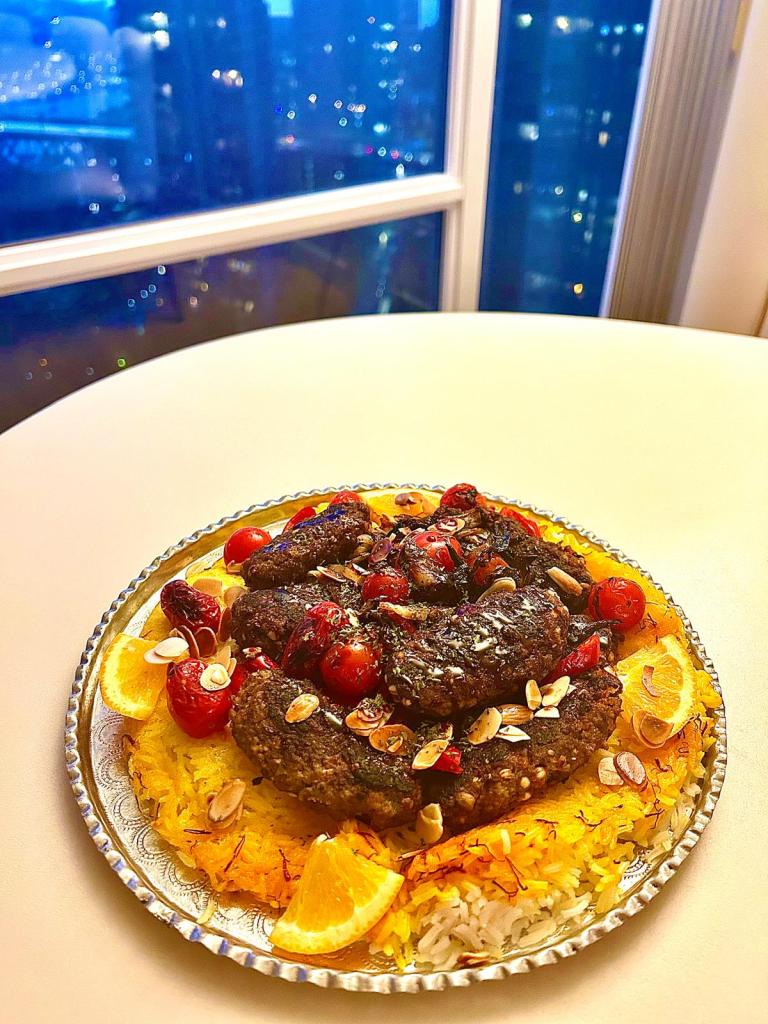
Fragrant with toasted cumin and shaped by hand, Armenian “Cumin Fingers” represent one of the oldest and most widespread culinary idioms of the region stretching from the Balkans to the Caucasus: the union of ground meat, grain, and spice, cooked over flame.
Across this vast geography, known variously for its diversity and porous borders, the keufteh / köfte / kufte / cufta appears under many names – from the grilled ćevapi of the western Balkans to the simmered kufteh tabrizi of Iran. Each tells a story of migration, trade, and adaptation. The Armenian variant stands out for its generous use of cumin, a spice long valued in Cilicia and the highlands of historic Armenia, where it arrived through the Persian and Levantine spice routes.
Ground lamb or beef is blended with fine bulgur, onions, herbs, and a touch of tomato, then shaped into finger-length kebabs. When grilled, they take on a smoky, aromatic depth that is unmistakably Armenian yet familiar across the region — proof that shared histories often taste alike.
The origins of keufteh, as it is known in the region, reach back to ancient Persia, where the word kofta meant “pounded.” From there, it travelled westward through the Ottoman and Persian empires, absorbing local grains, herbs, and rituals. In Armenia, especially in the Cilician and Marash regions, cooks combined meat with bulgur wheat, an ingredient that both stretched and enriched the dish, reflecting the ingenuity of a cuisine built on endurance and resourcefulness. By the 19th century, the recipe of this keufteh, and its regional cousins, were fixtures of Armenian family tables from Van and Urfa to Aleppo and Beirut – often prepared for feasts, Lenten breaks, or communal gatherings. The distinctive use of cumin, toasted and freshly ground, marks this version as both rural and refined: a seasoning drawn from the earth, connecting distant kitchens across the eastern Mediterranean.
In diaspora communities – from the Caucasus to Marseille – keufteh endured as a portable piece of identity. Whether grilled on a backyard fire, baked in home ovens, or served with fresh herbs and lemon, it remains a dish that bridges regions and generations.
Distinctively spiced and deeply aromatic, “Cumin Fingers” – a recipe given to me by an Armenian granny in Greece with the name Chamat ov Keufteh (although I have not encountered this name since) literally are a classic of Armenian and Anatolian cuisine, blending finely ground lamb or beef with bulgur, onions, and fragrant cumin. Shaped into finger-length kebabs and grilled or broiled, they deliver an earthy, smoky taste that speaks to the shared foodways of the Armenian highlands, Cilicia, and southeastern Anatolia.
The Armenian keufteh distinguishes itself through its balance of spice and restraint: the grounding warmth of cumin, the brightness of parsley, and the subtle sweetness of onions and tomato paste.
This particular version is known for its robust cumin fragrance — a spice historically traded through the Cilician ports and inland routes that connected Armenia with Syria and the Mediterranean. It is food of the hearth and the grill alike: simple, sustaining, and meant to be shared with flatbread, herbs, and lemon.
Prep Time: 20 minutes
Cook Time: 10 minutes
Resting Time: 1 hour
Total Time: About 1 hour 30 minutes
Servings: 4
You will need
- 1 lb (450 g) ground lamb or beef
- ½ cup fine bulgur wheat
- 1 small onion, very finely minced
- 2 cloves garlic, minced
- ¼ cup finely chopped parsley
- 2 tablespoons tomato paste
- 2 tablespoons cumin seeds, toasted and ground
- 1 teaspoon paprika
- 1 teaspoon Aleppo pepper (or ½ teaspoon red pepper flakes)
- 1 teaspoon salt
- ½ teaspoon black pepper
- ¼ cup ice water
For serving:
- Lavash bread or pita
- Sliced onions
- Chopped parsley
- Lemon wedges
Instructions
Soak the bulgur in warm water for 15 minutes, then drain well and squeeze out any excess moisture. In a large bowl, combine the ground meat, soaked bulgur, onion, garlic, parsley, tomato paste, cumin, paprika, Aleppo pepper, salt, and black pepper. Mix thoroughly with your hands until the ingredients are well combined. Gradually add the ice water while kneading the mixture for 5–7 minutes, until it becomes sticky and cohesive. This texture helps the keufteh hold its shape when cooked.
Cover and refrigerate for at least 1 hour to allow the flavours to meld.
Wet your hands with cold water and shape the mixture into small, finger-like kebabs about 7–8 cm long and 2–3 cm thick.
Grill or broil the keufteh for 3–4 minutes per side, until browned and cooked through. Alternatively, they can be pan-seared or cooked on a cast-iron griddle.
Serve hot with lavash or pita, sliced onions, chopped parsley, and lemon wedges.
Notes & Variations
- For a smokier version, grill over charcoal and brush lightly with butter or olive oil.
- For a softer texture, add a tablespoon of yogurt to the mixture before shaping.
- If serving as part of a mezze table, accompany with mutabbal (eggplant dip), cacık/tzatziki, or tomato-pepper salad (ezme).
 the kitchen sorcerer